  • 14 Years Toronto Plumbing
  • CSA B64.10 Certified
  • WSIB & $2M CGL
  • Licensed - Permitted - Rebate-Filed

Battery Backup Sump Pump Installation in Toronto, ON | Power Outage and Storm Dual System

Sump Pump Installation Toronto adds a secondary DC pump on a sealed 12V marine deep-cycle battery beside your primary pump, with its own float, a smart charger with automatic switchover and a WiFi alarm that alerts your phone. Backup output runs 10-25 GPM for roughly 8-24 hours per charge, depending on inflow. Installed as an add-on to an existing pit or as a standalone primary + backup system.

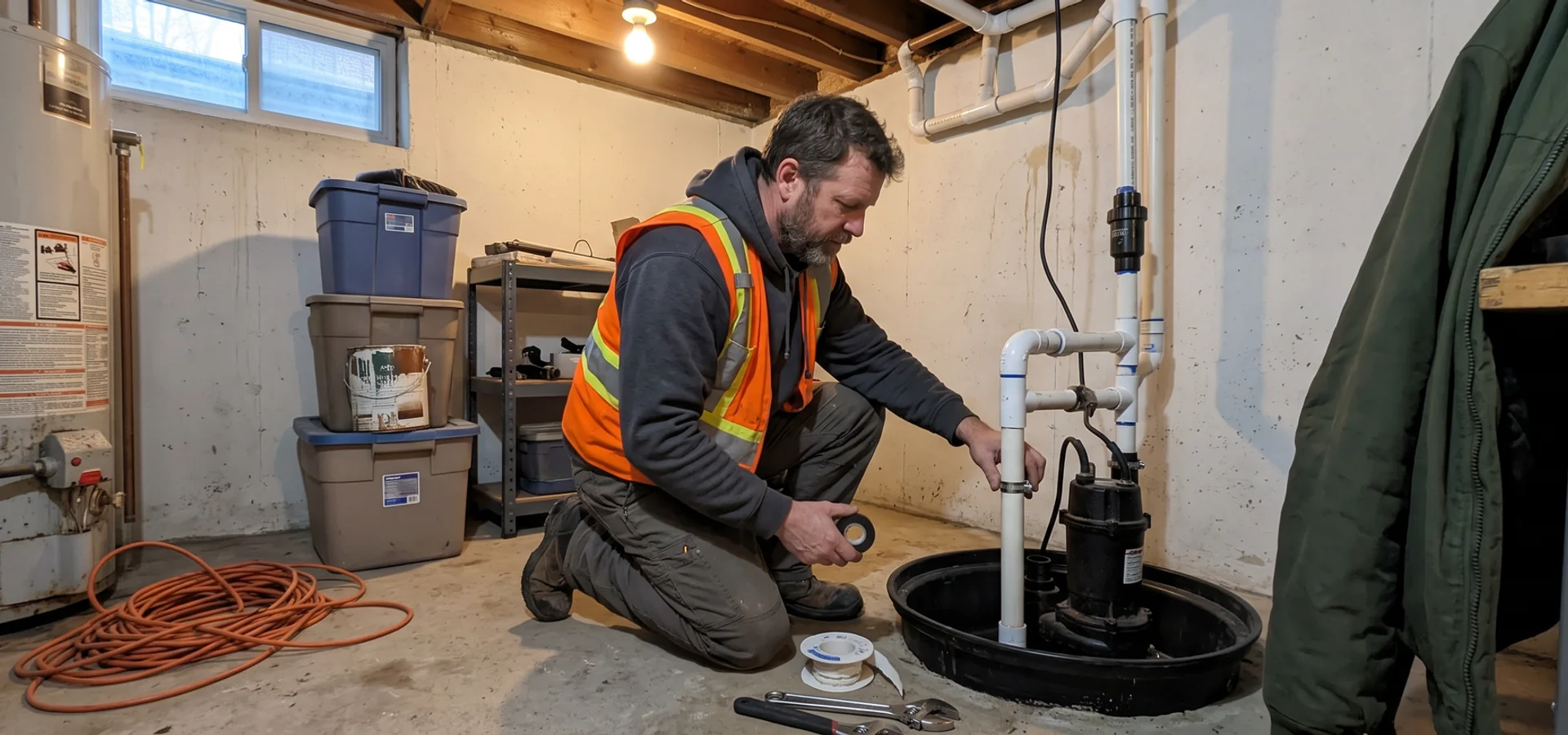
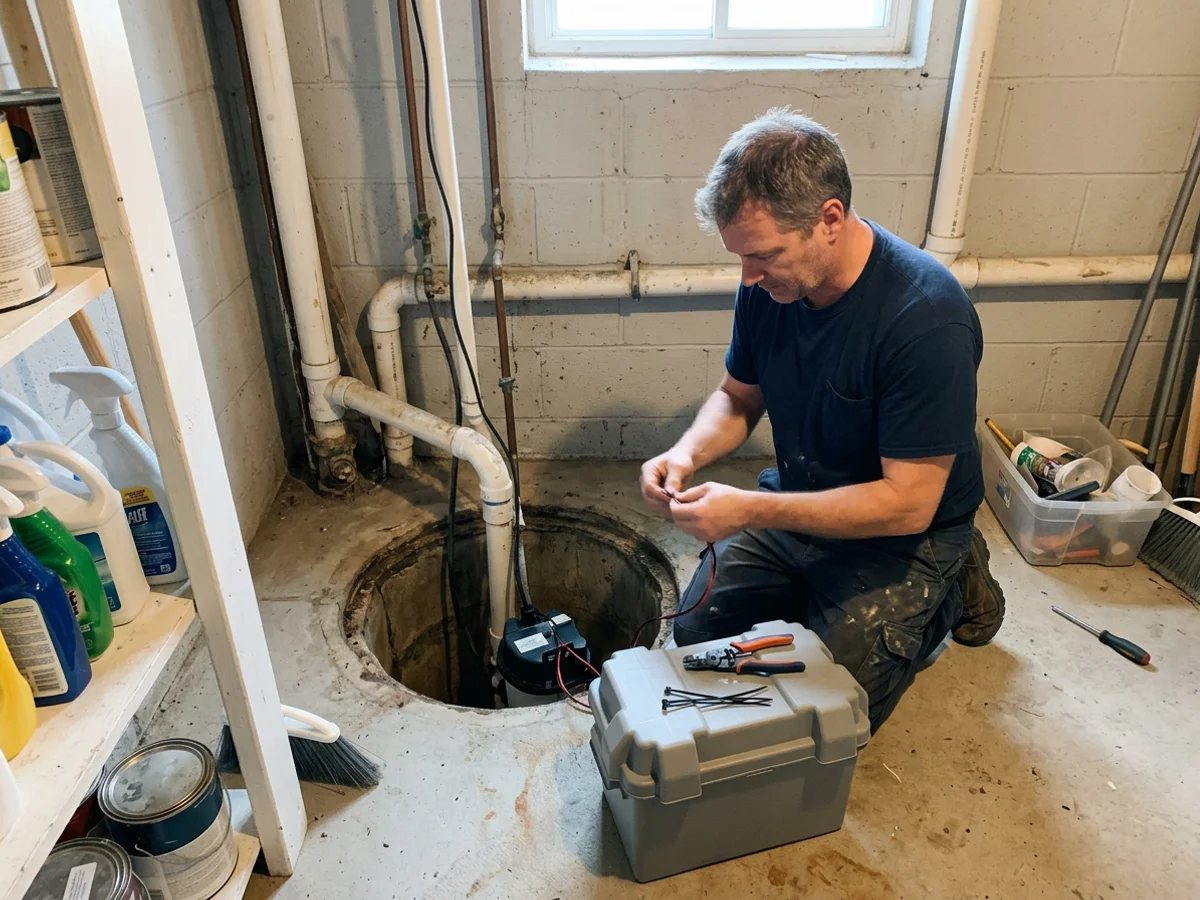
Plumber connecting a 12V battery backup sump pump and sealed battery box beside a basement sump pit
Published price $900 - $5,100

1,850+

Installs in GTA

14 Yrs

Since 2011

24/7

Live Dispatch

2-Yr

Workmanship Warranty

Have you ever laid awake listening to a heavy storm, wondering if your basement is staying dry?

We know that sinking feeling all too well. A sudden power outage during a Toronto downpour can turn a finished living space into a costly mess in minutes.

Our Toronto sump pump installation team is going to walk you through exactly how a professional battery backup sump pump installation protects your home. Grab a cup of coffee, and let’s go through the details together.

What Is a Battery Backup Sump Pump?

A battery backup is a second, smaller pump that lives right in your sump pit beside the main unit. We always install these as a critical safety net for homeowners. The main pump relies entirely on your home’s electricity to function, which leaves you exposed during an outage.

A standard secondary system consists of four main parts:

  • A 12V direct current (DC) motor.
  • A dedicated marine deep-cycle battery.
  • A smart trickle charger to maintain power.
  • An independent float switch.

Our team typically recommends Absorbent Glass Mat (AGM) batteries for 2026. These sealed units require zero maintenance and safely last three to five years. The backup unit uses its float switch to trigger the pump automatically if the water rises past the normal level.

Our technicians see the importance of this setup during major Toronto weather events. The storms that flood basements are frequently the same storms that knock out the grid. A reliable backup keeps the pit draining safely through the entire outage.

How Does a Battery Backup Sump Pump Work?

Under normal conditions, the primary AC pump does all the heavy lifting. The secondary system just sits idle while the battery stays on a constant trickle charge. We find that a modern 10-amp smart charger is perfect for maintaining the battery without overcharging it.

The primary pump can stop for several unexpected reasons:

  • A localized grid blackout.
  • A tripped GFCI outlet.
  • A stuck float switch.
  • A burned-out motor.

The water simply keeps rising in the pit when the main unit fails. Our preferred systems use an automatic transfer switch that reacts in less than a second. When the water reaches the backup float, this switch instantly sends battery power to the DC motor. The secondary pump then pushes water up through its own check valve and out an auxiliary discharge line.
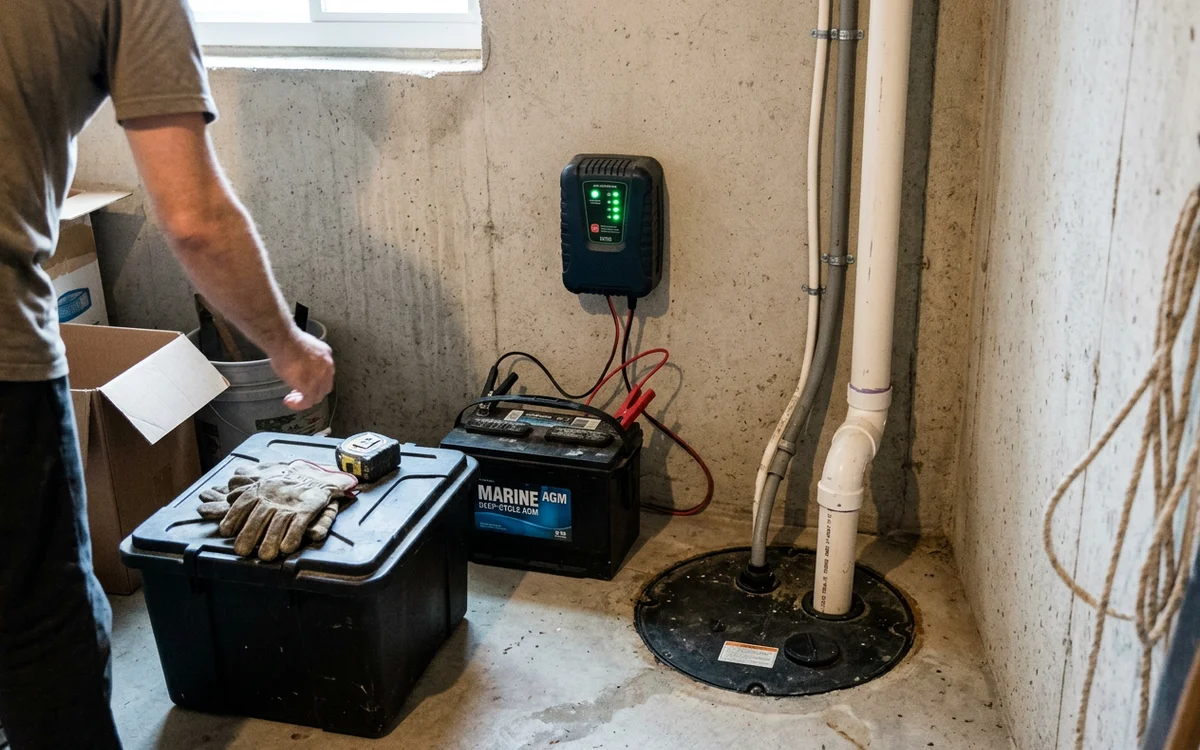
Smart charger with status lights above a marine deep-cycle AGM battery case next to the sump

We always include an audible high-water alarm so you hear it when you are home. Many modern setups also include a WiFi sump monitor like the Zoeller Z-Control Cloud or a Moen smart water device. These monitors connect to your home’s 2.4 GHz network to send push notifications straight to your smartphone. Our customers love getting these instant alerts if the power drops or the water gets too high while they are at work.

Battery Backup vs Water-Powered Backup

Choosing the right secondary system depends heavily on your local water supply and basement setup. The two main categories are battery-operated and water-powered units. Our technicians often help homeowners compare these two distinct technologies.

A water-powered pump, like the Liberty SJ10, uses your municipal water pressure instead of electricity. This unit requires a minimum of 20 PSI from the city line to function properly. We often explain that it removes roughly two gallons of pit water for every one gallon of city water it consumes.

A high-quality 12V battery system, like the Zoeller Aquanot Fit 508, relies entirely on stored electrical power. This specific unit can push an impressive 43 Gallons Per Minute (GPM) at a 5-foot head height. Our comparison table below breaks down the major differences between the two options.

Battery backupWater-powered backup
Power source12V deep-cycle batteryMunicipal water pressure
Typical outputUp to 43 GPMUsually lower, depends on pressure
RuntimeAbout 8-24 h per chargeAs long as water pressure holds
Install needsRoom in the pit, outlet for chargerDedicated water line, backflow preventer
UpkeepAnnual battery test, replace every few yearsAnnual test, uses city water while running
Best forMost Toronto homes, finished basementsLong absences with reliable pressure

The right choice depends on your specific plumbing infrastructure. We wrote about one Thorncliffe Park family’s choice between the two in our news section: Battery Backup or Water-Powered? A Thorncliffe Park Bungalow Story.

Types of Battery Backup Systems We Install

There are several ways to configure a reliable secondary drainage system for your property. The best choice depends on the age and condition of your current equipment. Our installers work with three main types of backup configurations.

Add-On Combination Units

An add-on system attaches a new DC pump, float, battery case, and charger directly to your existing plumbing. This is the most affordable route if your main pump is still relatively new. Our most common choices for this application include the standalone Zoeller Aquanot line. These units tuck neatly into the pit right beside your current hardware.

Standalone Primary and Backup Systems

Sometimes it makes the most financial sense to replace everything at once. A combination system pairs a brand new cast iron primary pump with a factory-assembled backup. We highly recommend the Zoeller Aquanot 508 ProPak for a complete replacement.

This specific package includes a heavy-duty Model 53 primary pump pre-piped with a high-capacity 12V secondary pump. A fully charged AGM battery gives this unit roughly six hours of continuous run time. Our team notes that this translates to about two days of normal, intermittent pumping during a power outage. These combo units are frequently paired with a new interior sump pump installation.

Monitored Smart Systems

Modern smart systems keep you connected to your basement no matter where you are. Any of the setups above can include a built-in WiFi monitor. We often install systems equipped with Liberty’s NightEye wireless technology or Zoeller’s Z-Control. These smart devices report high water events, power loss, total pump runtime, and battery health directly to your phone.

What Drives the Cost of a Battery Backup?

The final price of your installation depends on a few specific variables in your basement. Upgrading a bare-bones pit is very different from replacing a fully integrated system. Our estimators always provide a clear breakdown of these variables before starting any work.

A major factor is the price of the power source itself. A premium marine deep-cycle AGM battery typically costs between $250 and $400 CAD on its own. We also look at the condition of your existing discharge pipes to see if they need rerouting.

The good news is that local homeowners can often offset these expenses with municipal rebates. In 2026, the City of Toronto Basement Flooding Protection Subsidy Program offers eligible properties up to $6,650 in total rebates. Our administrative staff can help you claim up to $300 specifically for a new battery backup sump pump installation. The table below outlines the other common factors that shift the price from the lower end to the higher end.

Cost factorLower endHigher end
Existing pit conditionSealed basin with room for a second pumpSmall or cracked basin needing replacement
Backup modelBasic DC pump and chargerPremium unit with higher GPM and WiFi
Battery capacitySingle standard batteryLarger amp-hour or dual battery
Discharge tie-inEasy access to the riserRerouting around finished walls
Primary pumpKeeping a healthy existing pumpNew cast iron primary (standalone system)

When Do You Need a Battery Backup?

Every home with a below-grade living space should have a secondary drainage plan. The risks of relying on a single, grid-dependent pump are very high. Our plumbing experts strongly recommend a backup system if you have a finished basement.

The Insurance Bureau of Canada reports that the average flooded basement repair now costs over $43,000. A single failed pump during a storm can ruin drywall, flooring, and expensive media room electronics in a matter of hours. We highly suggest installing a secondary system if you fit any of these criteria:

  • You travel frequently or leave the property empty for long stretches.
  • Your home is on a street with an older power grid.
  • You live in an area prone to intense March and April ground thaws.
  • You store valuable items or have a home office downstairs.

A great approach for tight central Toronto homes includes pairing the backup with a flush sealed lid and a WiFi alarm. This keeps moisture and soil gases out of the house while ensuring you always know what is happening in the pit. Our team installs this specific configuration constantly.

If the main pump is already dead, you need to act quickly. Our emergency sump pump repair line is answered live 24/7. A certified technician can fix the primary unit and add the new backup system on the exact same visit.

Conclusion

Your home is likely your biggest investment, and keeping it dry should never depend on a single, vulnerable pump. Our team is always ready to evaluate your current setup and recommend the perfect safety net.

Reach out to us today to schedule your battery backup installation.
How Much Does Battery Backup Sump Pump Installation Cost in Toronto?

Our published range is $900 - $5,100 per system. $900-$2,200 as an add-on to an existing pit, or $2,800-$5,100 standalone with a new primary pump and battery. The written quote after your free assessment is the price you pay. No surprise line items.

Standalone Primary + Backup

$2,800 - $5,100

  • New cast iron primary pump
  • Zoeller Aquanot 508 ProPak or Liberty SJ10
  • Dedicated GFCI circuit, ECRA/ESA wiring
  • Flow test of both pumps
  • Phone alerts for water, power and battery
Get a written quote

Annual Battery Check

Quoted at visit

  • Battery load test
  • Float and alarm test
  • Charger and terminal check
  • Pit and check valve inspection
Get a written quote

Subsidy eligibility confirmed at assessment when part of a new sump install City of Toronto subsidy covers Toronto addresses only. Other GTA municipalities run their own programs.

Every install includes a written 2-year workmanship warranty. Pump manufacturer warranties apply on top and vary by model.

What Sets Our Battery Backup Work Apart in Toronto?

14 years in Toronto basements, 1,850+ sump installs and a licensed Master Plumber on every permit. Here is what that means on your job.

Built for storm blackouts

Toronto's worst flood nights often knock the power out too. A backup keeps the pit draining for roughly 8-24 hours on one charge.

Independent float

The backup has its own float switch, so a stuck primary float can't take both pumps down.

Alerts on your phone

High water, power loss, pump runtime and battery health. Useful in finished basements and if you travel.

Honest about your primary

No point putting a new backup next to a 12-year-old pump. We tell you straight if the primary needs replacing first.

Sealed AGM batteries

Maintenance-free marine deep-cycle batteries in a vented case, sized by amp-hour capacity to your pit.

Tested before we leave

We simulate a power cut and watch the backup take over. You see it work.

How Does Our Battery Backup Process Work?

No guesswork about what happens on install day. Most Toronto jobs follow these steps, and we tell you up front if yours will differ.

The honest timeline

Install work is usually 1-2 days on site. Where a Toronto Building drain permit is needed, filing takes about 5 business days, the inspector attends the same week as completion, and a City subsidy cheque arrives 6-8 weeks after the packet goes in.

  1. 1. Check the existing pit

    We inspect the basin, primary pump, float and check valve. If the primary is near the end of its life, we tell you before adding a backup to it.

  2. 2. Size the backup to your inflow

    A quick flow test tells us how hard the pit works in a storm, which decides the pump and battery capacity you need.

  3. 3. Written quote

    Backup pump model, battery size, charger and alarm all listed with the price.

  4. 4. Install (half day to one day)

    Backup pump set beside the primary with its own float, separate check valve, auxiliary discharge tie-in, battery box, smart charger and WiFi alarm.

  5. 5. Simulated power cut

    We unplug the primary and let the backup take over, so you see it work before we leave.

  6. 6. Phone alerts and annual reminder

    We set up the app on your phone and note the date for next year's battery load test.

Our Battery Backup Work Around Toronto

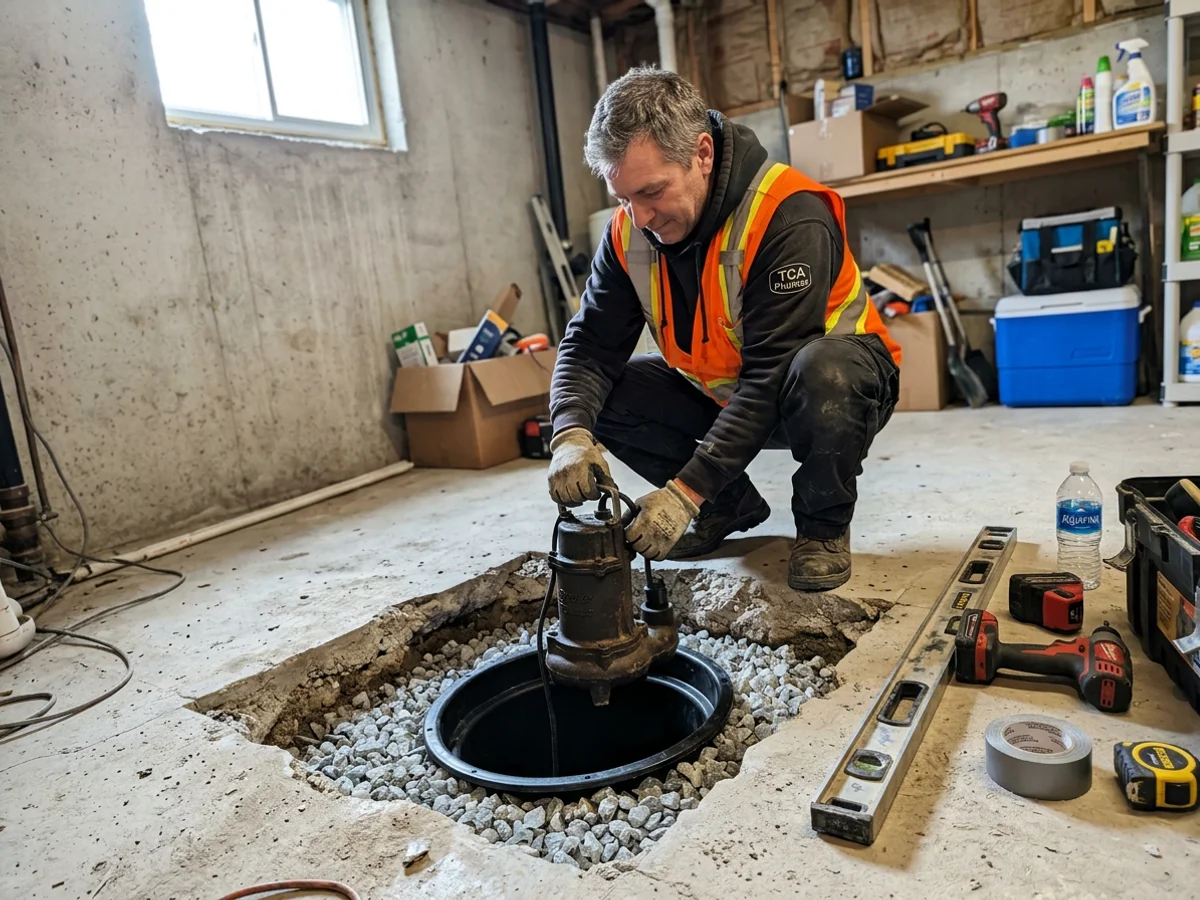
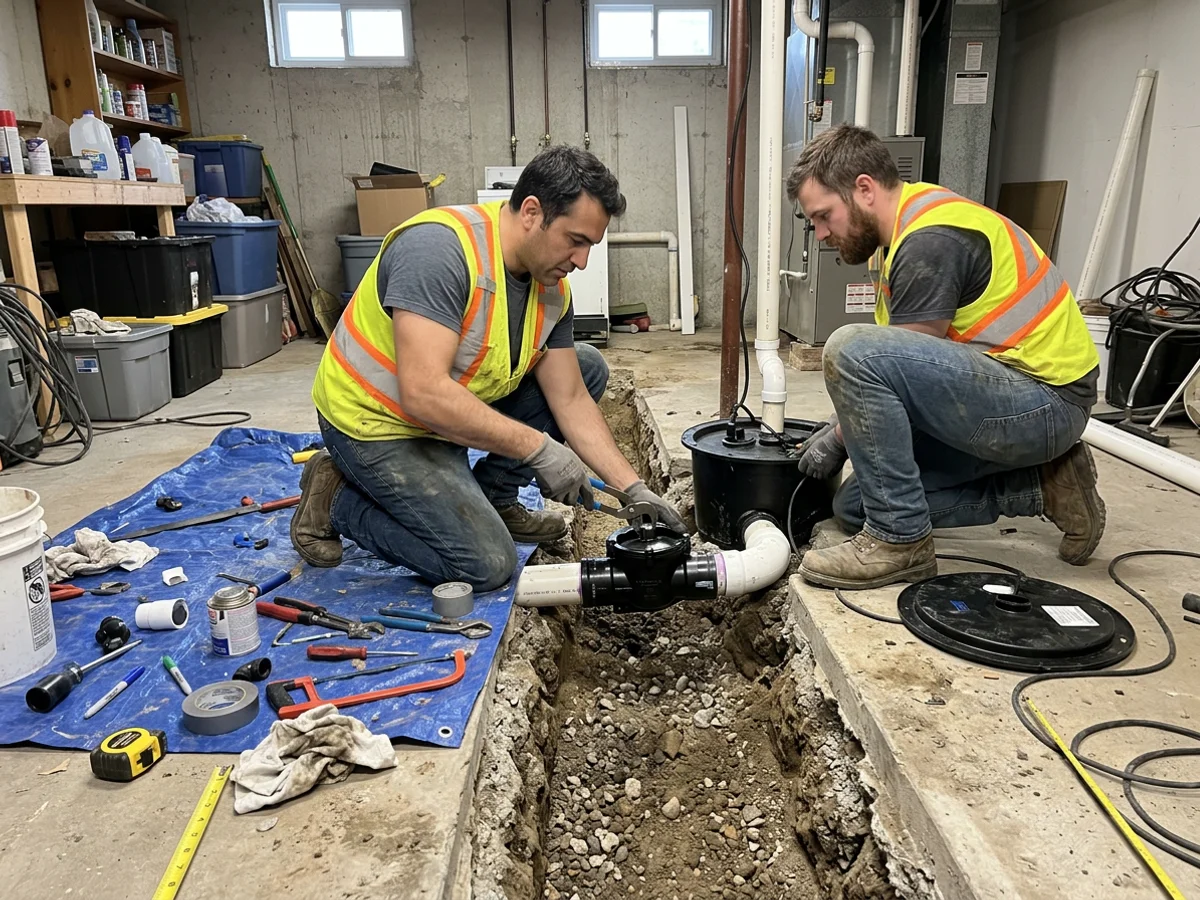
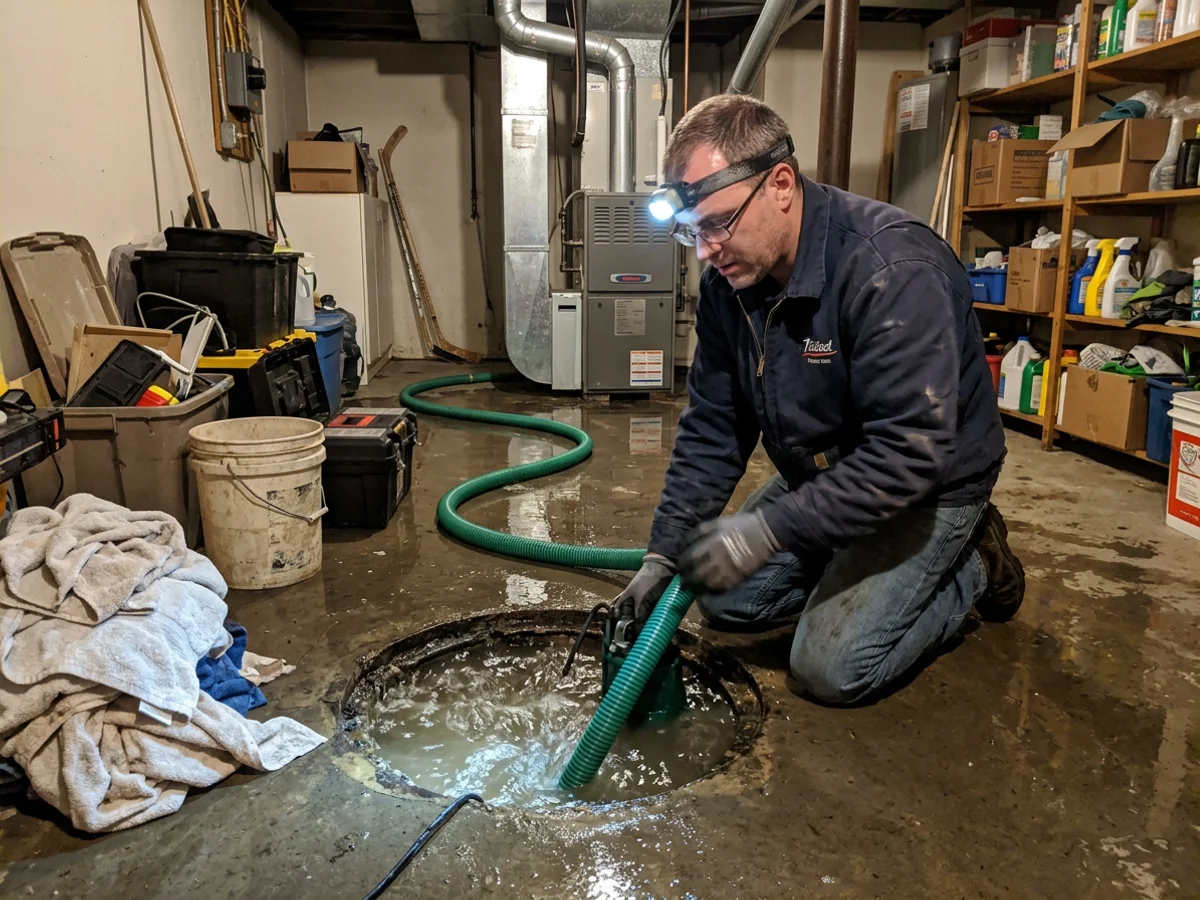
Real jobs, real basements. Tap any photo to enlarge it.

What Customers Say About Our Battery Backup

"We lost power for a day in a storm and remembered April 2013. They added a Liberty SJ10 backup on a deep-cycle battery with a WiFi alarm. My phone pings if anything changes."
Laura J. · Mount Pleasant Battery Backup Add-On $1,450 CAD
"We travel a lot, so we went with a full primary plus Aquanot 508 backup. Separate float, smart charger, alarm on the app. Finished basement, zero worry now."
Omar A. · Yorkville Battery Backup Standalone $3,600 CAD
"1970s bungalow sump died first April storm. Cast iron Zoeller installed same week, battery backup added. Dry through two more spring storms. Fair price and a tidy crew."
Ben M. · Thorncliffe Park Interior $2,450 CAD

Get a Written Battery Backup Quote

The one-hour visit covers a camera scope, a flow test, a City subsidy eligibility check and a written CAD quote with pump brand, basin type and discharge spec.

  • Written price before any work starts
  • Permit and inspection booked for you where required
  • Subsidy packet filed at $0 on eligible Toronto installs
  • 2-year written workmanship warranty

Book Your Battery Backup Assessment

Camera scope + pit inspection + written quote + City subsidy eligibility check. No obligation.

WSIB covered · Master Plumber (ON) · No pushy sales

Battery Backup Sump Pump Installation: Frequently Asked Questions

How much does a battery backup sump pump cost in Toronto?

A battery backup sump pump costs $900 to $2,200 CAD in Toronto when we add it to a pit you already have. If you need a new primary pump and backup together, a standalone system runs $2,800 to $5,100 with the battery.

The add-on price depends on the backup model (Zoeller Aquanot 508 ProPak, Liberty SJ10, Wayne ESP25, Basement Watchdog BWE or PHCC Pro 2400), the battery size, whether a WiFi monitor is included and how easy it is to tie a second check valve and auxiliary discharge line into your existing riser. Standalone prices rise with the primary pump choice, basin condition and any new wiring needed. Everything is in a written quote before we start.

How long will a battery backup sump pump run during a power outage?

About 8 to 24 hours on a full charge, at 10 to 25 GPM of output. The range is wide because runtime depends on how often your pit fills. In a dry week the backup may only cycle a few times an hour and last well past a day. During a heavy thaw, when the pit fills every couple of minutes, it works harder and drains the battery faster.

We size the battery's amp-hour capacity from a flow test of your pit, and the WiFi alarm warns you when the battery is getting low, so you have time to act. For long outages, a second battery or a generator plan can stretch runtime further.

Battery backup vs water-powered sump pump: which is better in Toronto?

For most Toronto homes, we prefer battery backup. A water-powered backup uses city water pressure to create suction and needs no electricity, which sounds ideal. But it uses a lot of municipal water while running, needs a dedicated water line and a backflow preventer, and only works as well as your water pressure, which can drop in a citywide storm. It also moves less water than many battery units.

A battery backup is easier to install in most basements, pumps more water, works on any water pressure and gives you phone alerts. Its weak point is the battery, which needs an annual load test and replacing every few years. Water-powered units make sense in some cases, like long vacation homes, and we will tell you if yours is one of them.

Does a battery backup kick in automatically?

Yes. The backup pump has its own float switch, mounted a little higher than the primary's. If the primary fails or loses power and the water keeps rising, the backup float lifts and the DC pump starts on its own. The smart charger handles the automatic switchover and keeps the battery topped up the rest of the time with a trickle charge.

Because the backup float is separate, it also covers a stuck primary float, a seized impeller or a tripped breaker, not just a blackout. The WiFi alarm logs every time the backup runs, so you know something needs attention on the primary.

How often should the backup battery be replaced?

Sealed AGM deep-cycle batteries typically last several years, depending on how often they work and the temperature of the room. We recommend an annual load test. When capacity drops, we replace the battery before it lets you down rather than waiting for it to fail in a storm.

Can you add a backup to my existing sump pump?

Usually, yes. Most sealed basins have room for a second pump. If the basin is too small or cracked, we will quote a new basin.

Do I need a WiFi alarm?

It is optional but worth it if your basement is finished or you travel. You get alerts for high water, power loss, pump runtime and battery health.

Is a battery backup covered by the City subsidy?

Eligibility is confirmed at the assessment when the backup is part of a new sump install. A backup added on its own to an existing pit does not usually qualify.

What is duty cycle and why does it matter?

Duty cycle is how much of the time a pump is running. Backup pumps are built for short emergency duty, which is why we size them to your inflow.

Where does the backup pump discharge?

Through its own check valve into an auxiliary discharge line that ties into the main riser, so it won't push water back into the pit.

Do you service battery backups you didn't install?

Yes. We test the battery, charger, float and alarm on most brands and give you a written report.

Is a Liberty StormCell battery an option?

Yes. Liberty StormCell maintenance-free batteries pair with Liberty backup systems, and we fit them when they suit the pit.

Eligible for $500 City of Toronto Rebate

New sump pit cut into your basement slab, sealed basin, cast iron pump and freeze-proof discharge, usually done in one day.

  • Zoeller M53 / M63
  • Liberty 257
  • 1/3 to 1/2 HP
  • 50-80 GPM
Interior Sump details

Ready to Book Battery Backup in Toronto?

Honestly, that is the whole pitch. We would rather spend an hour at your house now than pump out a finished basement later.

  • Published CAD pricing
  • 2-year workmanship warranty
  • Licensed Master Plumber (ON)
  • City subsidy filed at $0
Call 24/7 Get $1,750 Rebate