Battery Backup or Water-Powered? Toronto Homeowners Choose Sides: A Thorncliffe Park Bungalow Story
A 1970s Thorncliffe Park bungalow lost its pump in an April storm. Why the owner chose cast iron plus battery backup over water-powered, and how it held up.
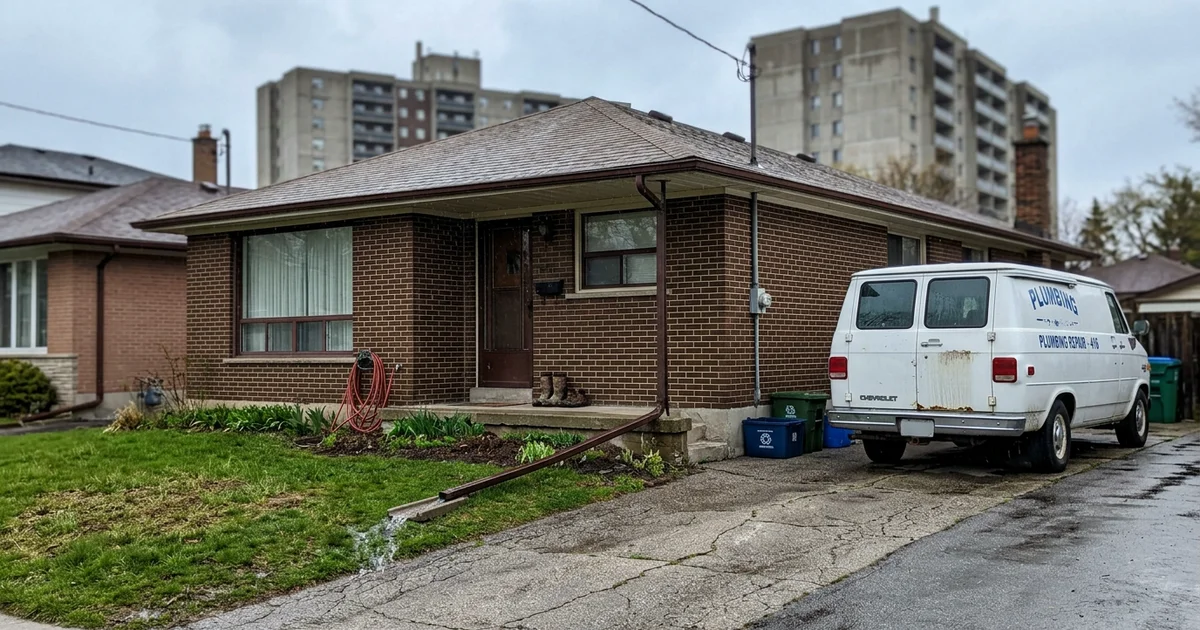
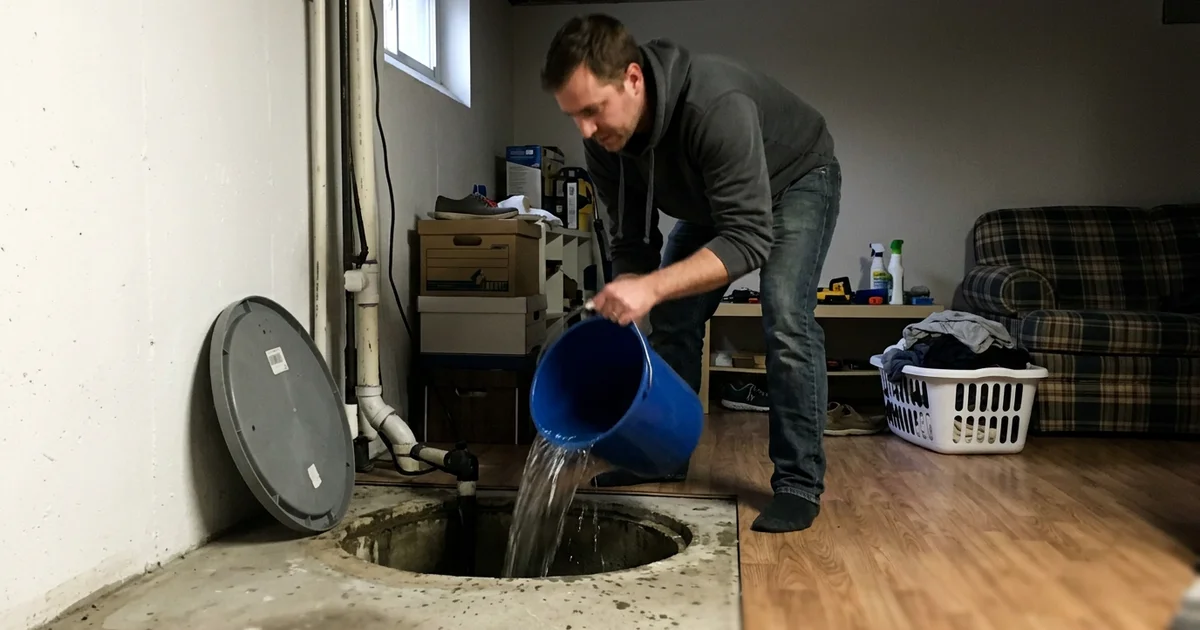
Ben’s 1970s bungalow in Thorncliffe Park had a sump pump for years. Like a lot of pumps in the neighbourhood, nobody thought about it much. Then the first big storm of April came through, the pump quit partway through the night, and Ben spent the early morning hours moving boxes off a wet floor. This is the story of what happened next, and why he ended up choosing a cast iron pump with a battery backup over a water-powered system.
The question at the heart of it is one we hear every spring: “Battery or water-powered? Which one actually works in Toronto?”
The Failure: An Old Pump on a Long Night
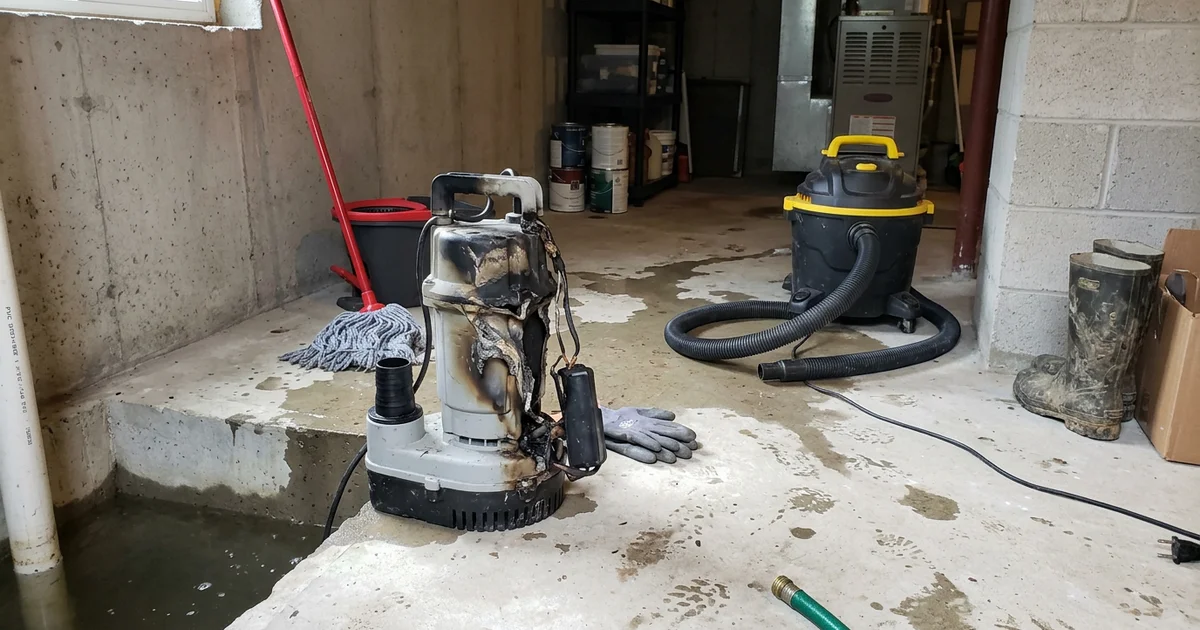
When we arrived, the pit was full and the old pump was silent. It was not a mystery. The pump was plastic, well past the 5-7 years we usually see from that type, and it had been running on and off for hours as the storm fed the pit. Somewhere in the night, it overheated and stopped.
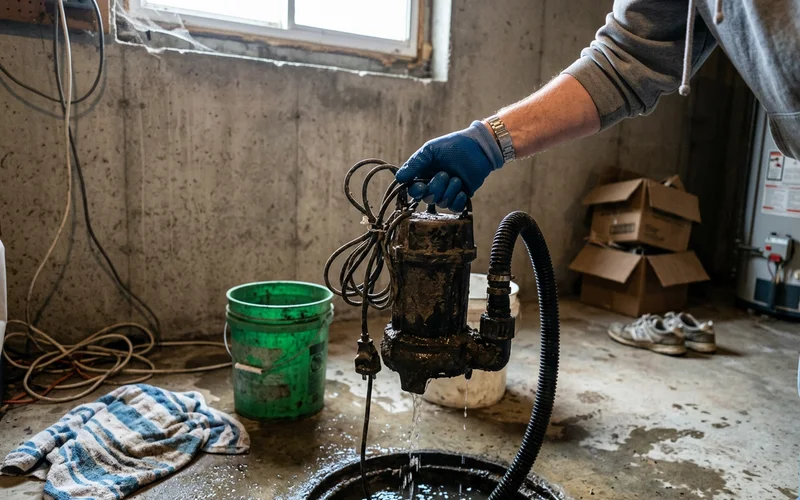
Ben was lucky in one way: the basement was mostly unfinished, so the damage was limited to storage boxes and a rug. But he had plans to finish it, and the night made one thing clear. One pump, with no backup, was not enough for the house he wanted.
The question behind the question
“What happens next time the power goes out?” was the real worry. His street had lost power in storms before.
The Decision: Battery Backup or Water-Powered?
Both kinds of backup do the same job: keep the pit draining when the main pump cannot. They just do it differently.
A water-powered backup uses the pressure in your municipal water line to create suction and lift water out of the pit. It needs no electricity at all, which sounds perfect for a blackout.
A battery backup adds a second, smaller DC pump in the pit with its own float switch. It runs off a sealed 12V deep-cycle battery that a smart charger keeps topped up. When the main pump stops, the backup starts by itself.
| What mattered to Ben | Battery backup | Water-powered |
|---|---|---|
| Works in a power cut | Yes, roughly 8-24 h per charge | Yes, as long as water pressure holds |
| How much water it moves | 10-25 GPM | Usually less, depends on pressure |
| Extra plumbing | None beyond the pit | Dedicated water line and backflow preventer |
| Uses city water while running | No | Yes |
| Phone alerts | Yes, with a WiFi alarm | Usually not built in |
| Upkeep | Annual battery test, battery replacement every few years | Annual test |
In our opinion, for most Toronto bungalows, a battery backup is the better fit. Water-powered units have their place, but they move less water, need more plumbing work to install properly and depend on water pressure that can drop when a whole neighbourhood is dealing with the same storm. Ben’s biggest worry was a long outage while he was at work, and a WiFi alarm that pings his phone answered it.
We gave him both options in writing anyway. It is his basement.
The Install: Cast Iron Primary, Battery Backup the Same Week
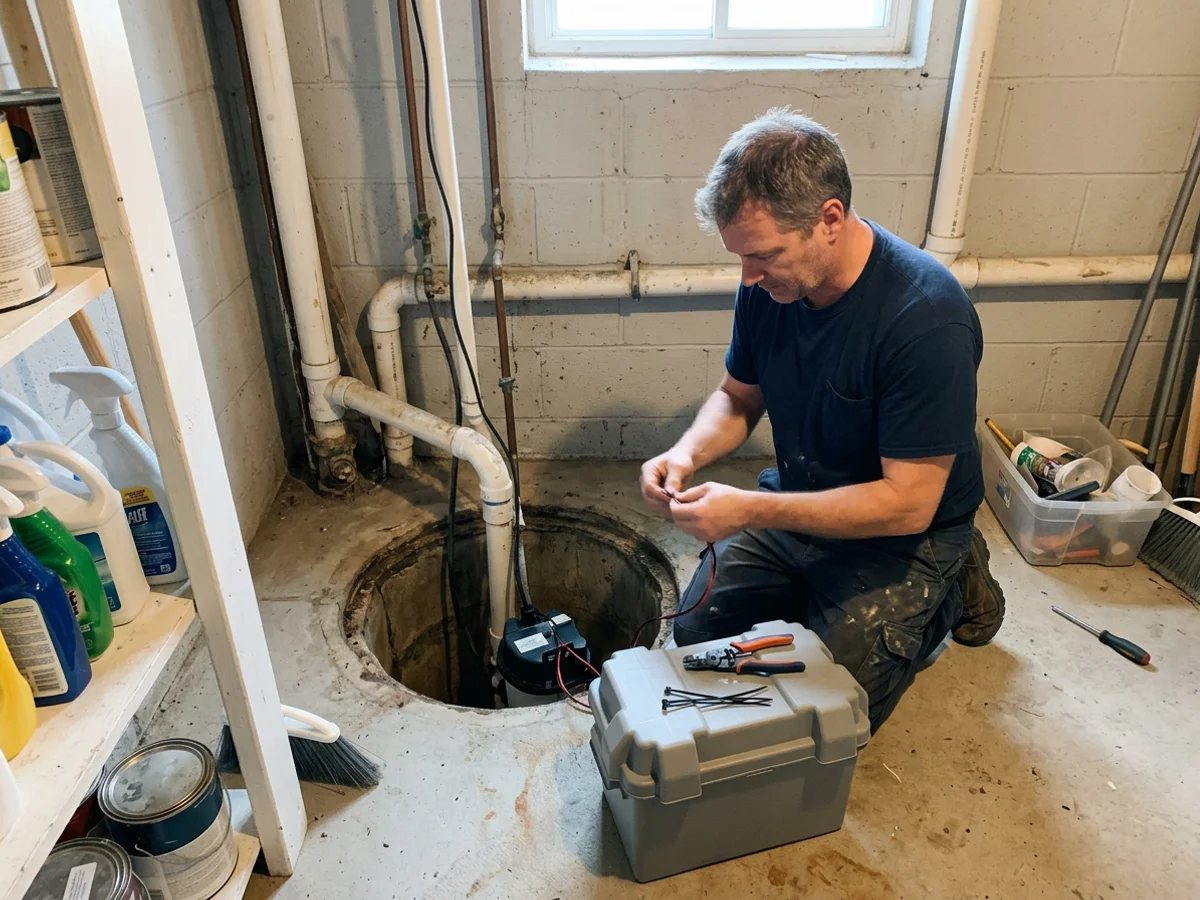
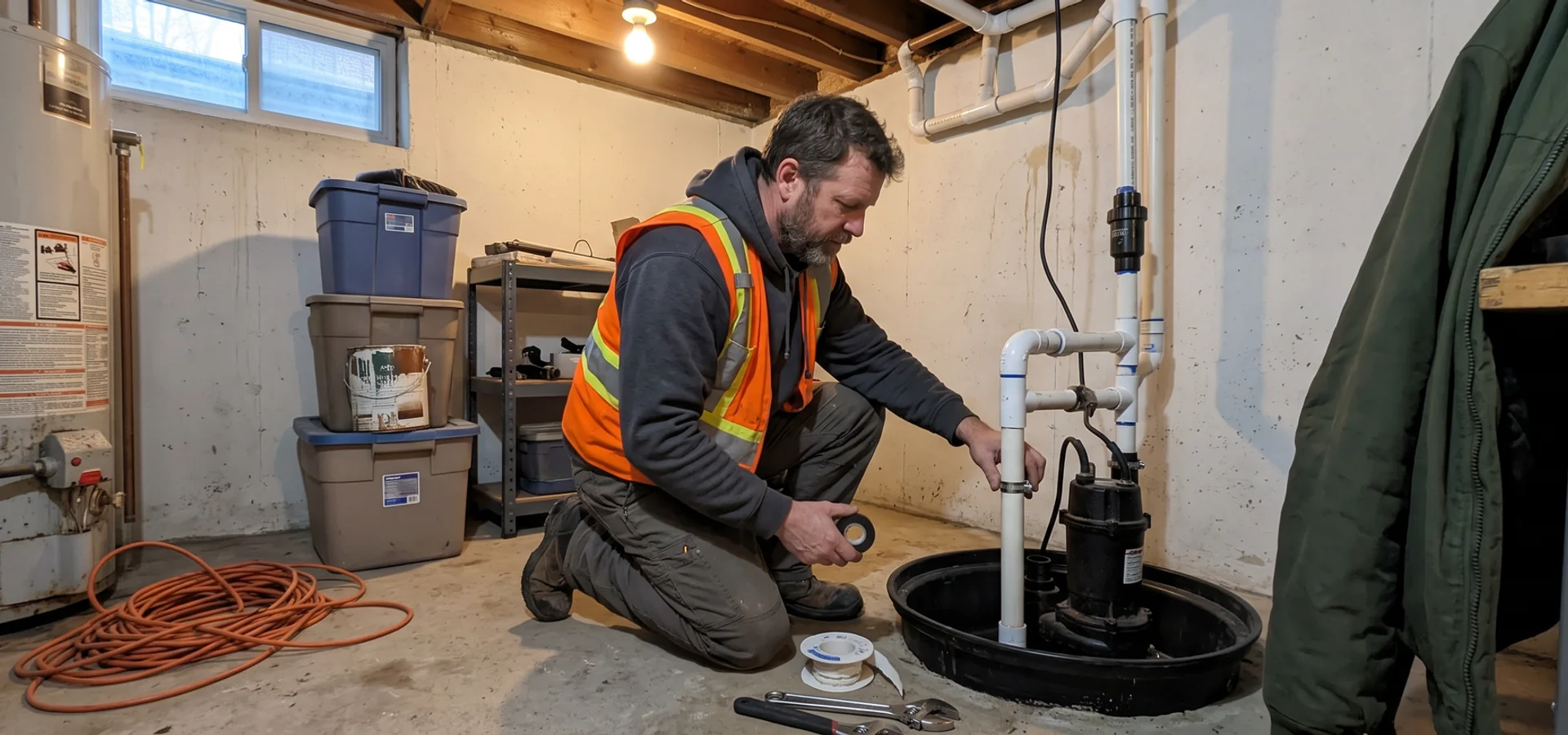
The pit itself was in decent shape, so the job was a replacement and upgrade rather than a new install. Here is what went in:
- A cast iron Zoeller primary pump in place of the old plastic one, sized to his pit’s inflow from a flow test.
- A new float switch and check valve, since the old valve was letting water fall back and adding to the run time.
- A battery backup pump set beside the primary, with its own float mounted a little higher, its own check valve and a tie-in to the discharge.
- A sealed deep-cycle battery and smart charger with automatic switchover.
- A WiFi alarm that reports high water, power loss and battery health to his phone.
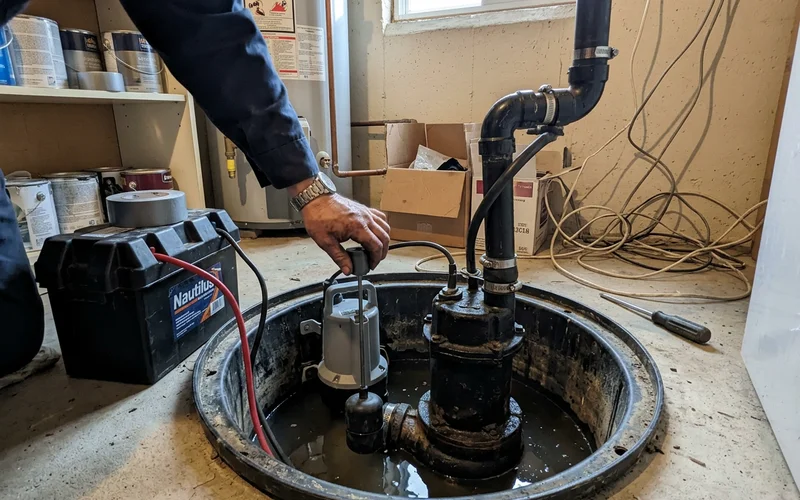
The primary went in the same week as the failure. The interior work came to $2,450 CAD, and we added the backup within the same week too. Before we left, we unplugged the primary and let the backup take over so Ben could watch it work, then set the alarm up on his phone.
The Result: Dry Through Two More Spring Storms
Ben’s words, from his review: “1970s bungalow sump died first April storm. Cast iron Zoeller installed same week, battery backup added. Dry through two more spring storms. Fair price and a tidy crew.”
That is the whole point of the setup: the primary does the everyday work, and the backup and alarm are there for the night the power goes out.
Why the Primary Pump Mattered as Much as the Backup
It would have been easy to add a backup and leave the old plastic pump in place. We advised against it. A backup is built for emergency duty, not for doing the main pump’s job every day. If the primary is tired, the backup ends up running far more than it should, the battery wears out early, and you are back where you started. Putting a cast iron primary in first, then adding the backup, means each pump does the job it was designed for.
What We Would Tell Anyone in the Same Spot
- If your pump is plastic and older than five years, replace it with cast iron before it fails, not after.
- If you plan to finish the basement, add a battery backup at the same time. It is far cheaper than new drywall.
- If you are weighing water-powered, ask about your water pressure, the extra plumbing it needs and how much water it actually moves. For some homes it is the right answer. For most Toronto bungalows we see, battery wins.
- Test the battery every year. A backup with a dead battery is not a backup.
Thinking about a backup before next spring? See our battery backup sump pump installation service, talk to our Toronto sump pump installation crew, or book a free assessment.