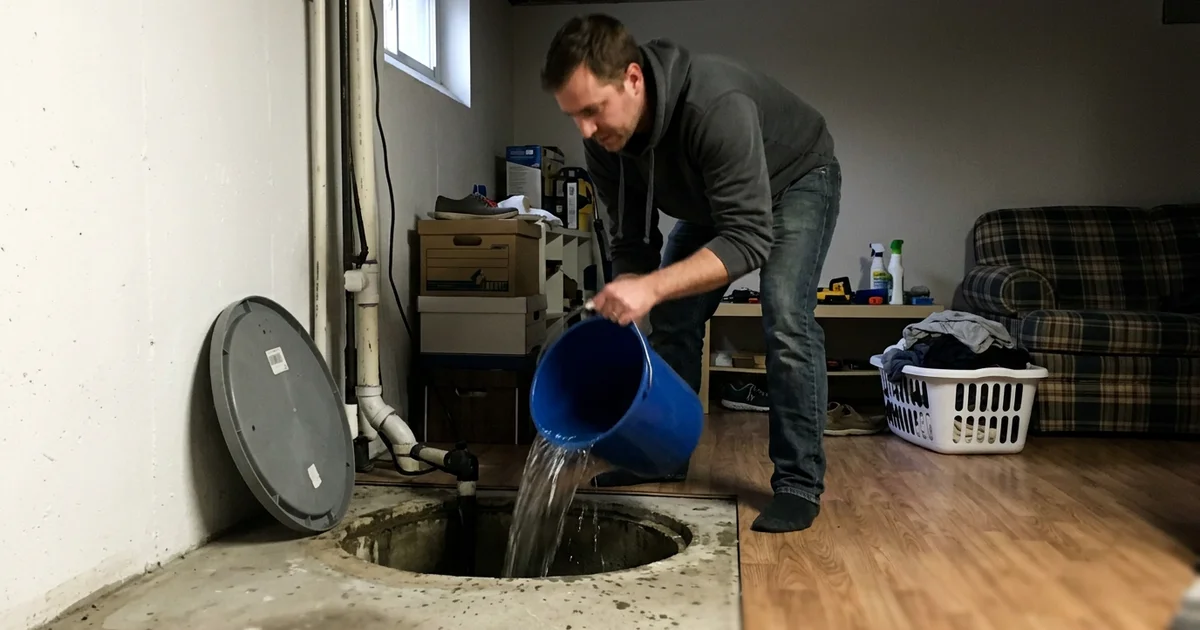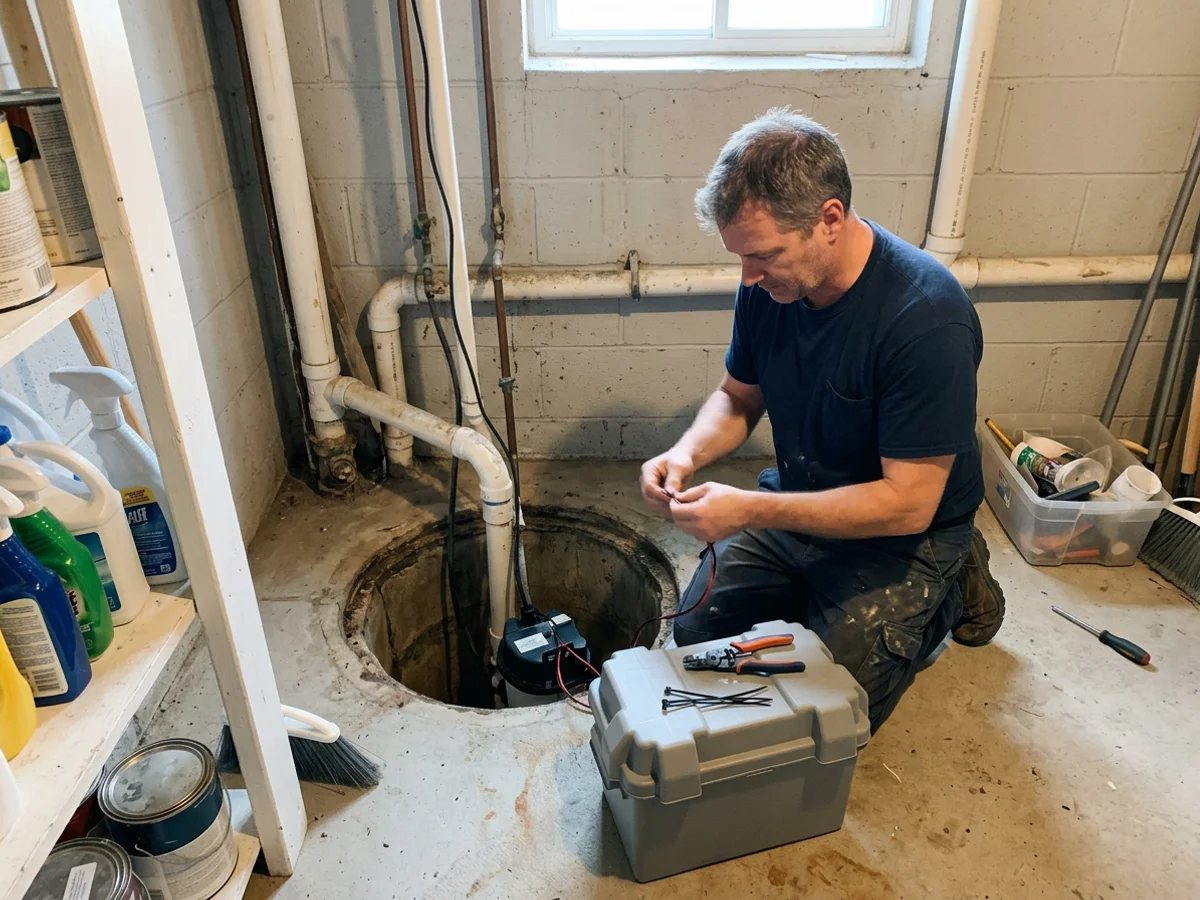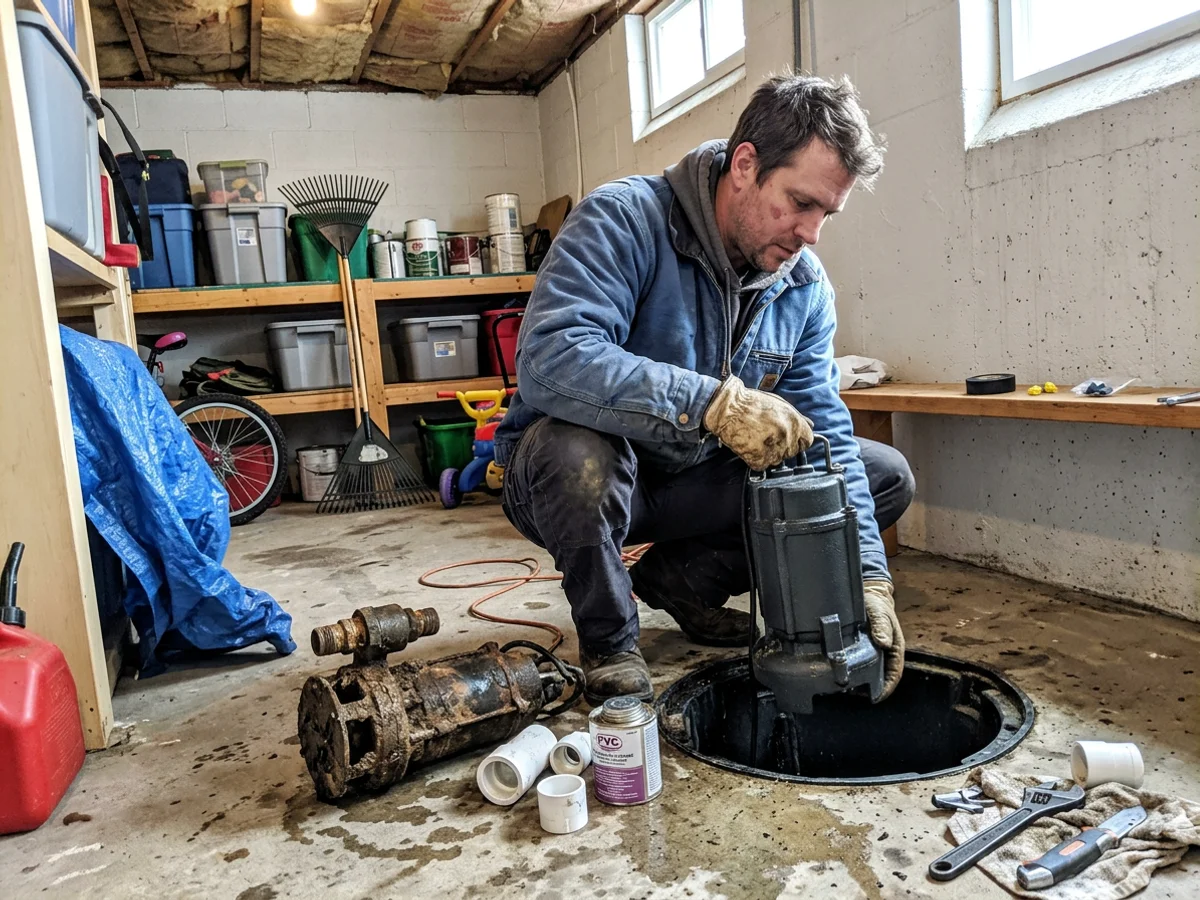
Have you ever walked down your basement stairs during a heavy spring rain, holding your breath? That sinking feeling of finding water where it doesn’t belong is something many homeowners face.
Our sump pump installation team in Toronto has helped thousands of families turn that anxiety into peace of mind with a proper interior sump pump installation. A brand-new pit and pump can completely transform a basement that has never had one before.
This guide covers new installs specifically. If you already have a pit and the pump has failed, you should see our guide to sump pump replacement instead, since the job and the price are different.
Grab a cup of coffee, and let’s go through the steps together.
I will show you exactly how to protect your home from unexpected water damage.
What Is an Interior Sump Pump Installation?
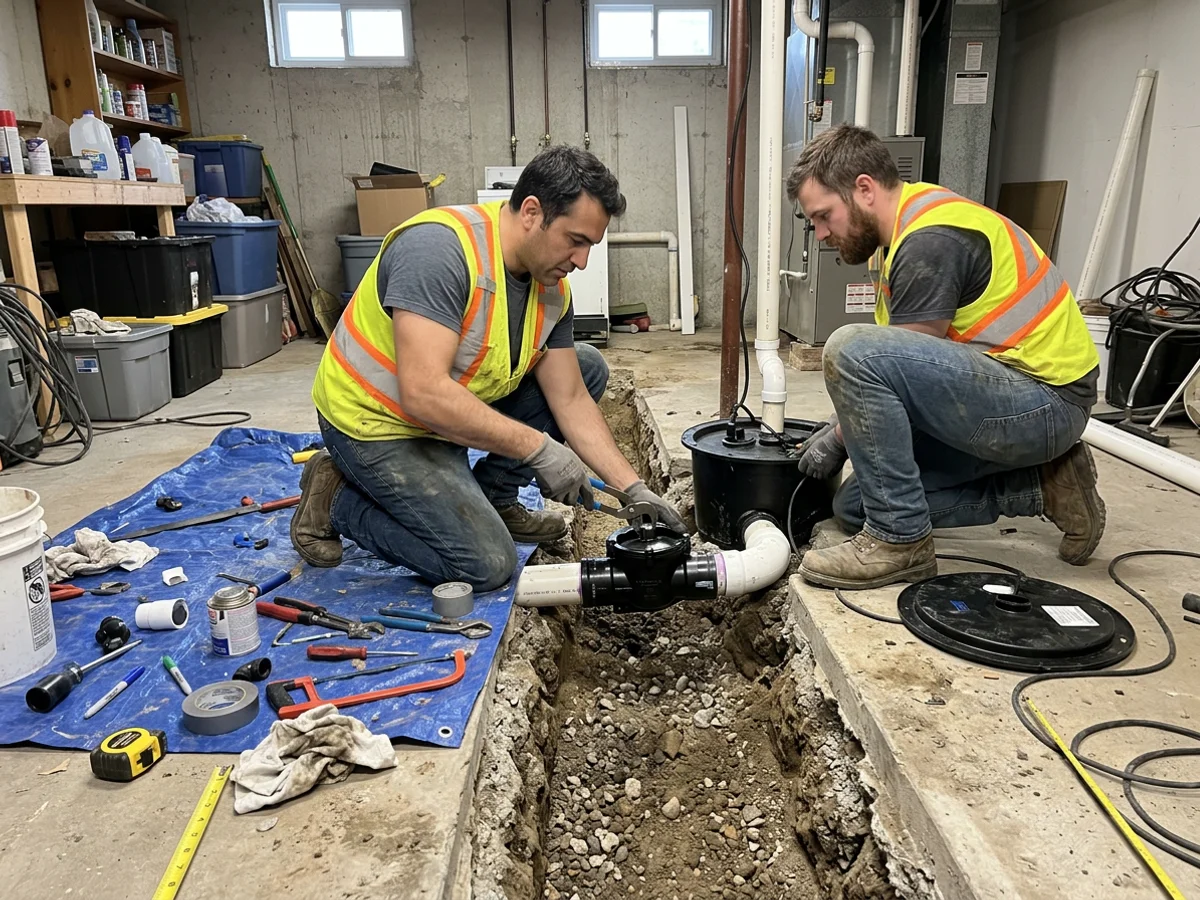
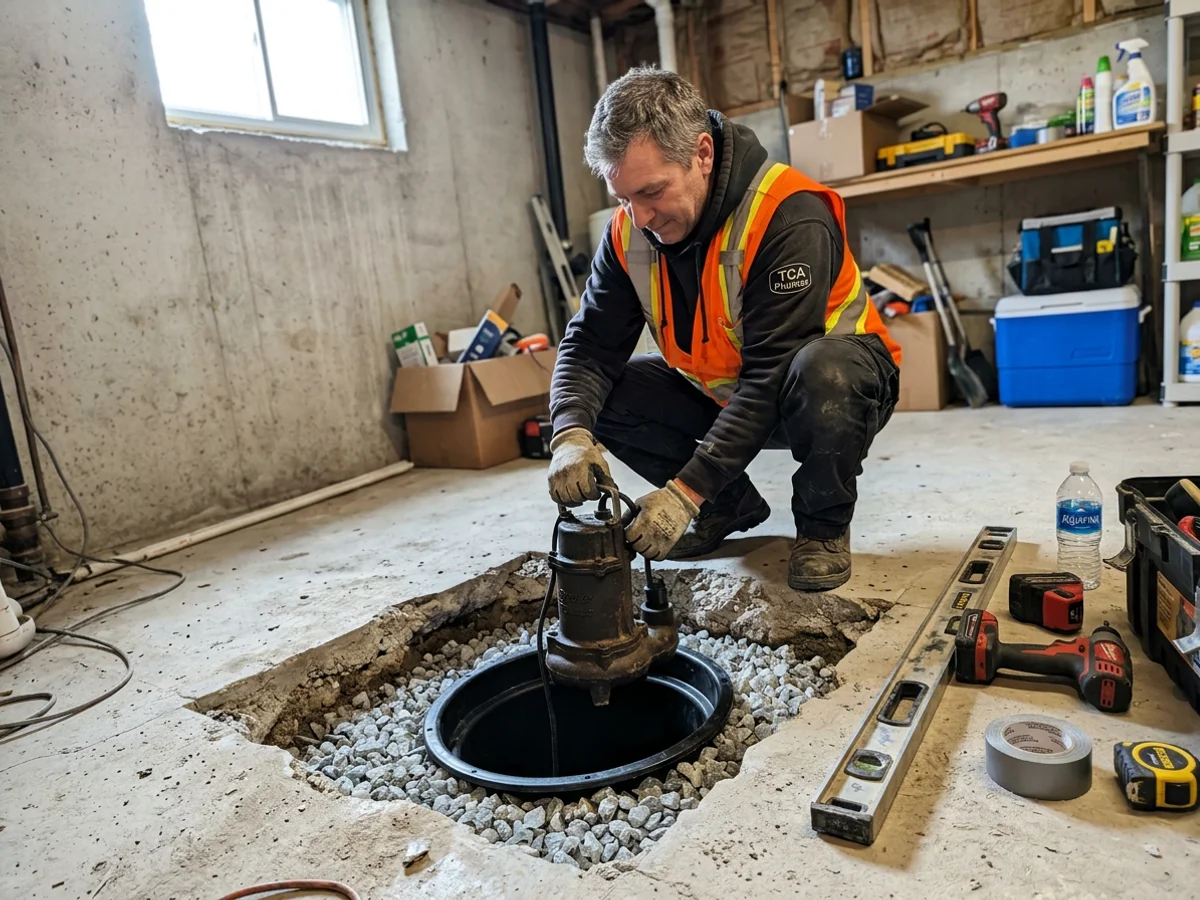
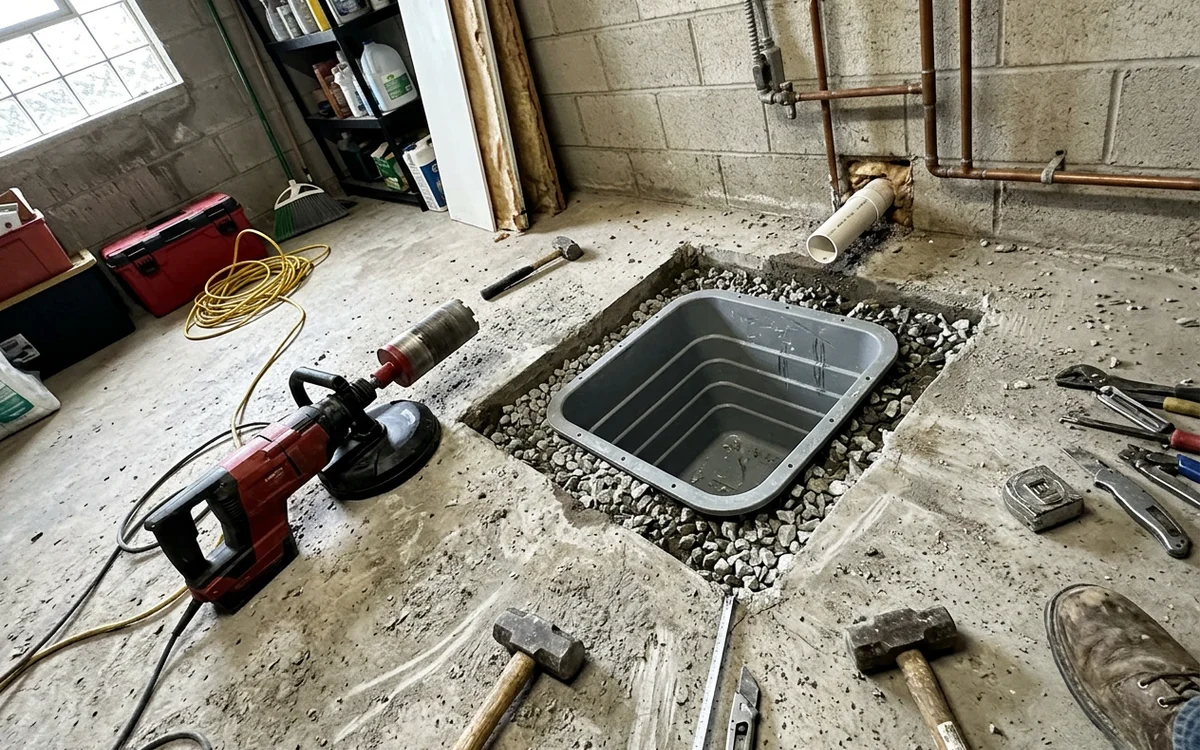
An interior sump pump installation involves cutting an opening in the concrete slab at the lowest point of your floor. We dig below the footing level and set a sealed polyethylene basin surrounded by clear stone backfill. This setup allows groundwater under the slab to drain safely into the basin through a short run of perforated weeping tile.
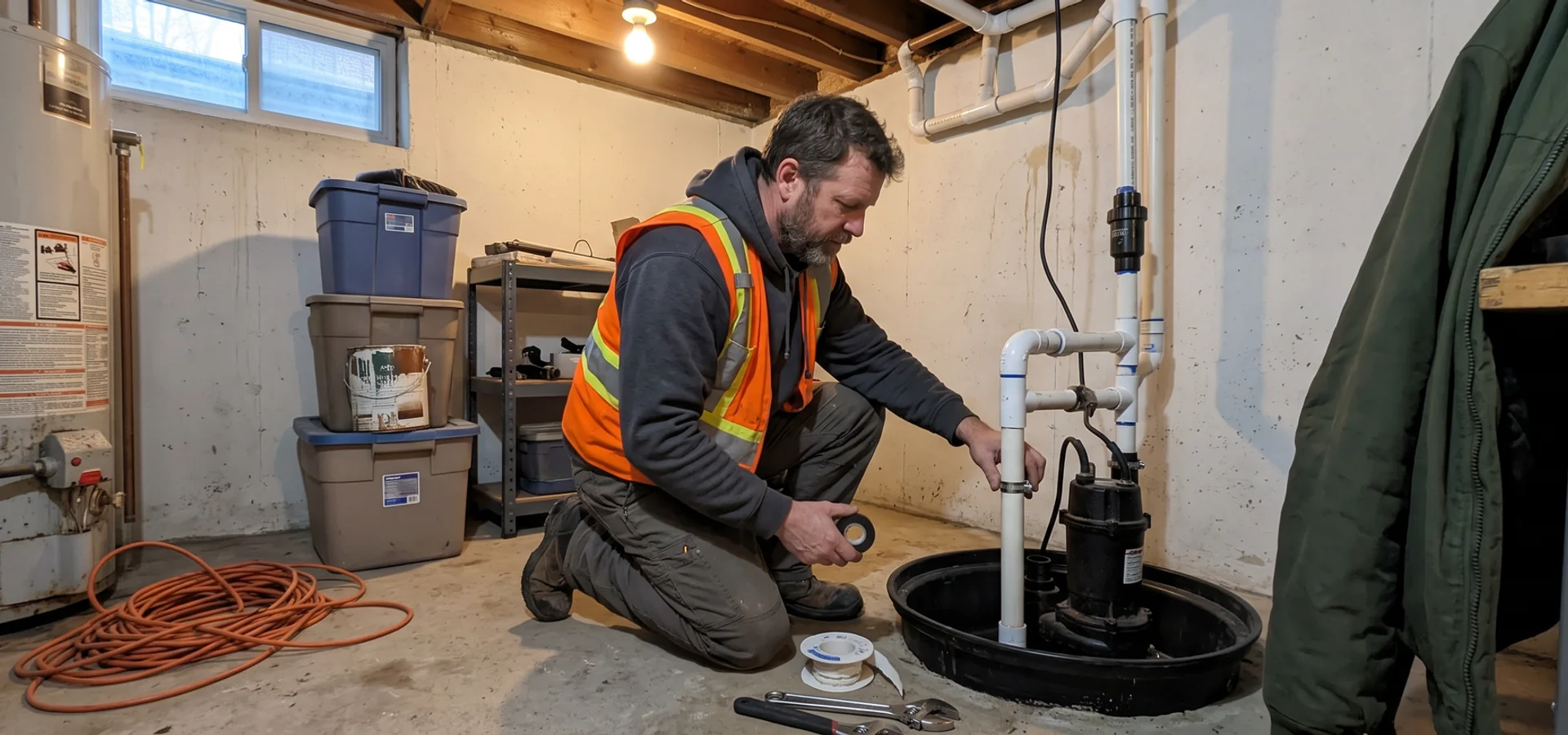
The pump sits inside this basin, waiting for the water to rise. A vertical float switch turns the unit on automatically, and a PVC discharge pipe carries the water out of your house to a freeze-resistant outlet.
We complete all work strictly to the following standards:
- Ontario Plumbing Code Part 7 requirements.
- Electrical Safety Authority (ESA) rules for dedicated GFCI circuits.
- City of Toronto Basement Flooding Protection Subsidy guidelines.
As of May 2026, the City of Toronto Basement Flooding Protection Subsidy Program covers a massive portion of these costs. The city raised the maximum subsidy per property to $6,650. We file all the necessary subsidy paperwork for you to ensure you get your refund without the headache.
How Does a Sump Pump Work?
A sump pump is essentially a small electric motor that sits in a pit below your basement floor. Groundwater from the soil around your foundation drains into this pit through weeping tile and the clear stone bed. When the water rises to a specific height, a float switch activates the motor.
The vortex impeller inside the pump spins rapidly inside a cast iron casing to push water up the discharge pipe. Our crews install a check valve on this pipe to stop the expelled water from flowing right back down when the motor shuts down. The whole cycle usually takes under a minute to complete.
In a heavy Toronto thaw or during extreme weather like the record-breaking September 2026 storm that dropped 100 millimetres of rain in hours, this cycle might repeat every few minutes for days. This rapid cycling is completely normal during extreme weather events.
Here is a quick look at the core components of the system:
- The Basin: A durable plastic pit that collects groundwater.
- The Float Switch: The trigger that tells the motor when to turn on and off.
- The Impeller: The spinning fan that pushes water upward.
- The Check Valve: A one-way gate that prevents backflow.
One common complaint with older systems is a loud, annoying “thud” when the motor turns off. We avoid this by using a high-quality Campbell or Brady quiet check valve. These hydrodynamic valves eliminate the water hammer effect, making the system virtually silent.
Where Should a Sump Pump Be Installed?
The ideal spot is at the lowest point of the basement floor, right next to where water typically shows up first. We also need a practical route to an exterior wall for the discharge pipe. In most Toronto bungalows built between the 1950s and 1970s, that sweet spot ends up in the back corner of the utility room near the floor drain.
Our technicians actively avoid placing a pit under a load-bearing post, tight against the furnace, or in the middle of a room you plan to finish later. Location matters immensely for both structural integrity and future renovations.
Handling Complex Basements and Soils
Split-levels present a trickier situation because the lower level is often finished. The true low point is not always where you might expect it to be. We map the underground drains carefully before choosing a spot to ensure maximum efficiency.
Soil conditions also dictate the best placement and digging methods. For example, Scarborough and Etobicoke are known for heavy clay soils. Clay holds water against your foundation like a sponge instead of letting it drain away. This intense hydrostatic pressure forces water through the cove joint where the wall meets the floor, making strategic pump placement critical.
Types of Interior Sump Pump Installs
Every home faces unique water challenges. We customize the setup based on your specific basement layout and water table.
| Install type | Best for | Typical spec |
|---|---|---|
| Standard sealed pit | Unfinished or partly finished basements | 18 gal basin, 1/3 HP cast iron pump, short discharge |
| High-flow pit | Fast-filling pits, high water table near the lake or ravines | 24 gal basin, 1/2 HP pump, larger discharge |
| Finished-basement pit | Flooring, drywall and furniture in the room | Flush low-profile sealed lid, WiFi alarm, careful dust control |
| Pit with battery backup | Finished basements, frequent travellers | Primary cast iron pump plus a 12V DC backup pump |
Pedestal units are another option you might come across. We also install pedestal pumps when a client requests one. Submersible models in a sealed basin are generally quieter, move more water, and keep damp smells trapped away from your living space. Our submersible sump pump page goes into that comparison in much more detail.
If you have a finished basement, I highly recommend adding a smart monitor like the Moen Smart Sump Pump Monitor or a PumpSpy system. These smart devices track water levels and power status in real-time, sending alerts straight to your phone. The average basement flood causes over $10,000 in damage, making early detection incredibly valuable.
What Drives the Cost of an Interior Sump Pump in Toronto?
Our published range is $1,800 to $3,200, and the typical Toronto job lands at $2,400 to $2,800 before applying any city rebates.
| Cost factor | Lower end | Higher end |
|---|---|---|
| Pit location and access | Open corner of an unfinished room | Finished room, split-level, tight access |
| Pit depth and soil | Sandy fill, easy digging | Heavy clay (common in Scarborough), deeper pit |
| Basin size | 18 gal standard | 24 gal for heavy inflow |
| Pump | 1/3 HP cast iron (Zoeller M53, Liberty 257) | 1/2 HP high flow (Zoeller M63, M267) |
| Discharge run | Straight out the nearest wall | Long run around finished ceilings |
| Electrical | Outlet already nearby | New dedicated GFCI circuit from the panel |
Pump total dynamic head is a major factor in the final price. This measurement calculates the vertical lift plus the friction loss inside the pipe. Most residential units handle up to 12 feet of maximum head, but a long or high discharge path eats into that flow rate. We size the motor precisely to match your real-world lift requirements.
Electrical work is another variable that often surprises homeowners. You need a dedicated GFCI circuit to ensure the system never trips from an overloaded shared breaker. An official Electrical Safety Authority (ESA) permit and inspection for this wiring typically adds $300 to $900 to a project, but it is a non-negotiable legal requirement in Ontario.
When Do You Need a New Sump Pit?
You likely need a system if water pools at the wall-floor joint or the floor drain during every spring thaw. A basement sitting below street level with no active drainage is also a prime candidate for an upgrade. Many insurers now mandate these installations after paying out a sewer backup claim, often offering a 5% to 10% premium discount once the work is verified.
Homes with older weeping tile still tied directly to the sanitary sewer almost always need a new pit as part of a weeping tile disconnection. Anyone worried about a major sewer surcharge should look at the sump pump and backwater valve combo.
Maximizing Your Subsidies and Discounts
The financial incentives to upgrade have never been better. The City of Toronto expanded their subsidy limits in May 2026, meaning you can now claim up to $2,250 just for the pump installation. We help you navigate these applications so you get the maximum allowable return.
If water seeps in along every wall rather than just one specific corner, a single pit might not solve the problem. An interior perimeter drain feeding into the basin is usually the better fix for widespread seepage.
Can You Install a Sump Pump Yourself?
You can certainly buy a pump at a big box store, but cutting a concrete slab and digging below the footing is not a simple weekend project. We highly recommend leaving this job to licensed professionals due to the strict safety and legal codes involved.
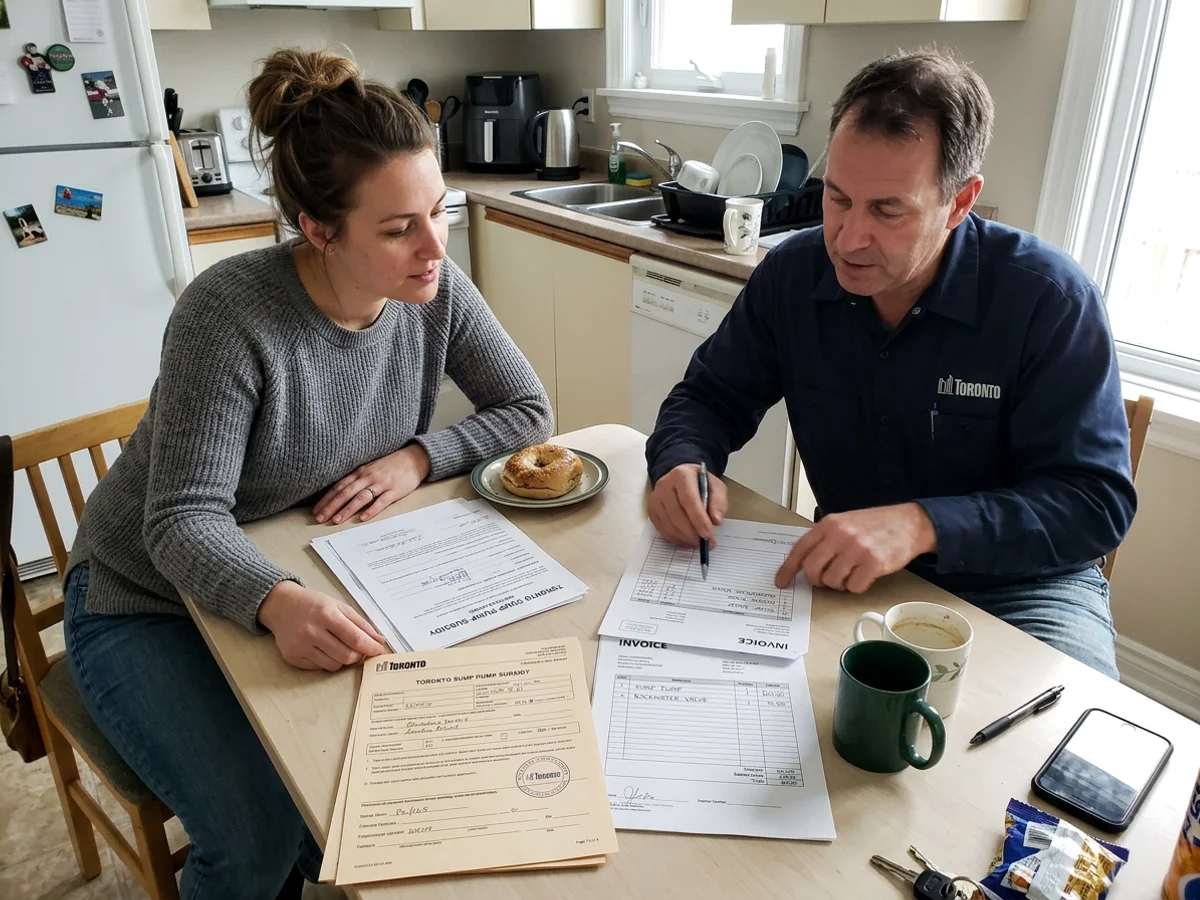
A DIY install simply does not qualify for the City of Toronto subsidy. The city requires specific documentation to issue your refund:
- A licensed contractor’s itemized invoice.
- A valid building permit number.
- A final inspection certificate.
The rebate money usually covers a massive share of the professional labour difference, making a DIY attempt financially risky.
There are also serious physical risks to doing this work yourself. Cutting concrete releases respirable crystalline silica dust. The Occupational Safety and Health Administration warns that inhaling this fine dust can cause silicosis and other severe lung diseases. We use specialized dust shrouds, HEPA vacuums, and wet-cutting techniques to keep your family and our crew perfectly safe.
Book a free assessment today before committing to a full interior sump pump installation. We will tell you straight if a new pit makes sense, or if a smaller fix will do the job just fine.